
Product guidance
Ultra-Thin and Minimal-Prep Veneers: Thickness, Prep and Case Limits
Minimal-prep veneers widen the options but narrow the case list. This guide covers thickness limits, preparation and the situations where they are the wrong choice.
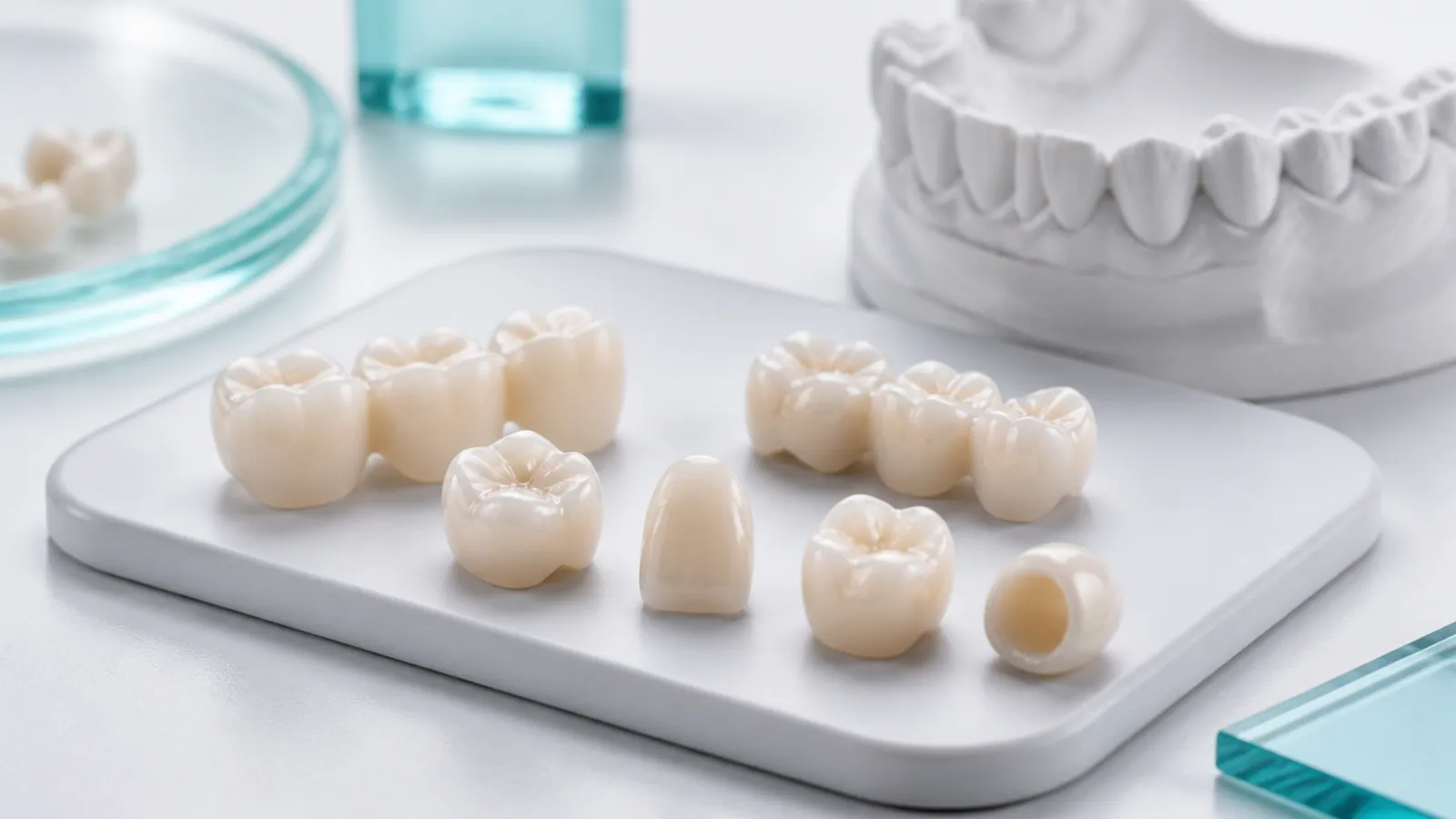
Ultra-thin veneers, sometimes described as minimal-prep veneers, are among the more conservative options in esthetic dentistry, but the name can mislead. They remove little or no tooth structure, which sounds like a clear advantage, yet that same thinness is also the source of their limits. Understanding where minimal-prep veneers help and where they fall short is the difference between a happy refinement case and a disappointed patient.
This guide covers thickness ranges, bonding requirements, color expectations and the case list that actually suits these restorations, with links to the broader dental veneers scope and the types of dental veneers comparison.
What “minimal prep” means in practice
Minimal prep does not mean “no planning.” It means the preparation is reduced to a feathered edge or no preparation at all, relying on the existing enamel surface as the bonding substrate. The technician then builds the restoration to a very low thickness, often laminating it directly onto the facial surface.
The clinical payoff is preservation of tooth structure and, frequently, a reversible-feeling option for patients hesitant about conventional veneers. The clinical trade-off is that the result is constrained by what is already there: the shade, the contour and the enamel quality all carry through.
Thickness ranges
Ultra-thin veneers are commonly specified in the very low fractions of a millimeter range, with some preparations aiming for no reduction. The exact number matters less than the consequence: at low thickness, the porcelain contributes almost nothing to masking, and the underlying tooth dominates the final color.
That thickness also limits how much the tooth’s shape can change. A conventional veneer can rebuild contour because it adds material; an ultra-thin one mostly resurfaces what exists. The lab should confirm the specified thickness against the case goal before production. When the target is a no-prep result, the design is also limited by the contour of the existing tooth, because there is no reduction to create room. The lab will usually confirm whether the planned look is reachable at the stated thickness before committing to production.
Enamel and bonding requirements
Because there is little to no preparation, the bond depends almost entirely on intact enamel. Dentin exposure, decalcified areas or previous restorations on the facial surface weaken the bond and change the color the veneer will show. These cases are often better served by a conventional veneer that can incorporate and mask the substrate.
Bonding protocol matters more than with thicker veneers, because there is no mechanical retention to fall back on. Etching, isolation and adhesive technique carry the entire case. The lab can design the veneer, but the bonding outcome is decided in the chair.
Color change expectations
A frequent mismatch with ultra-thin veneers is expectation of color change. With almost no material between the eye and the tooth, the veneer cannot hide a dark or discolored substrate. Patients seeking a dramatic whitening or correction of internal stain are usually poor candidates.
Where they work well is refinement: closing small gaps, smoothing contour, evening out minor shape irregularities, and adding a touch of incisal character to already light teeth. The types of dental veneers guide frames where these sit against feldspathic and lithium disilicate options.
Where they work well
Ultra-thin veneers work well on sound, light-colored enamel where the desired change is small. Diastema closure of minor gaps, subtle contouring, and reshaping without reduction are classic indications. Patients who want conservation and have favorable starting teeth are the right audience.
They also suit cases where a trial of the look is valuable: because preparation is minimal, the step to a more traditional veneer later remains open. That optionality is part of the appeal.
Contraindications and limits
Heavy discoloration, bruxism, poor enamel, previous facial restorations, and significant shape change all push against ultra-thin veneers. In these situations a conventional veneer or another restoration type is the more predictable choice. Expecting a thin laminate to perform like a built-up veneer leads to remakes and frustration.
The lab’s job at submission is to flag when the preparation will not support the specified result. A question at this stage prevents a mismatch after bonding, which would be far more disruptive. For strength questions on other veneer types, the E.max crowns page covers lithium disilicate behavior.
Records needed for design
Send a clear prescription with tooth numbers, target shade and the specific change you want, plus a neutral-lighting photograph of the teeth and a stump shade reference. Margin and facial surface photos help the lab judge enamel quality and bonding prognosis. State explicitly that the case is planned as no-prep or minimal-prep so the design reflects that constraint. Photographs taken at the same angle and lighting as the final check make the review consistent from submission to delivery.
The more the lab understands the starting condition, the better it can confirm whether the thin specification is realistic. Vague instructions invite the wrong restoration.
Reviewing the first unit
Because the margin for error is small, review the first unit carefully before committing to a full set. Check the color against the target under the same lighting used for the reference photo, confirm the contour change matches the goal, and verify the bond surface is clean and isolated at placement.
If the first unit reads differently from the expectation, pause the series and revisit the plan rather than proceeding. One corrected unit is far better than a whole arch built on the same assumption.
Next step
If you have a conservative case in mind, send a case with photographs, stump shade and a clear statement of the intended change so the lab can confirm whether ultra-thin veneers are appropriate. Start with a single unit, review it against your reference, and extend the series only once the result matches the plan.