
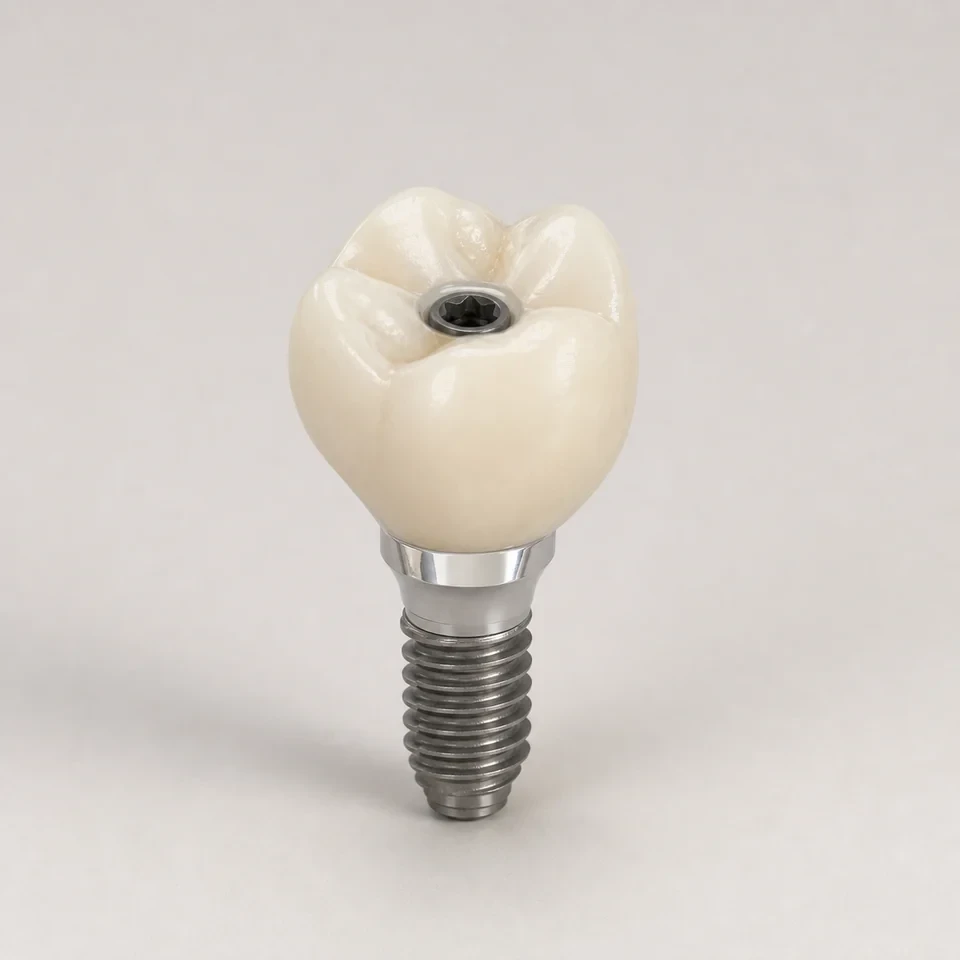
Implant Crowns
Implant-supported crowns designed from scan body data with system and connection verification, retention options reviewed case by case.
Details at a Glance
| Restoration type | Implant restoration — single units and multi-unit cases |
|---|---|
| Material options |
|
| Design options |
|
| Commonly considered for |
|
| Records to supply |
|
| Quality focus |
|
| Turnaround | Production time depends on restoration type, case complexity and confirmed requirements. |
What Implant Crowns Are
An implant crown dental lab China program begins with the premise that every single-tooth implant restoration is designed from confirmed implant data rather than assumed dimensions. At KC Dental Lab an implant crown is the visible, functional top of an implant-supported reconstruction: a cement-retained or screw-retained crown that replaces a missing tooth by seating on or attaching to the implant connection through an abutment or a titanium base. The crown restores occlusal contact, esthetics, phonetics and mastication for the treated site, and its design is driven by the implant platform, the available restorative space, the soft-tissue contour and the opposing dentition. Because the connection is system-specific, the first step of any case is verification: the implant system, platform diameter and connection geometry are confirmed before a digital design is opened. The restoration is planned in software from the confirmed scan body, so the physical interface and the digital library must describe the same connection.
Who It Suits
Implant crowns suit clinicians and laboratories that manage single missing-tooth gaps or limited multi-unit implant spans where a conventional bridge would require preparation of healthy adjacent teeth. They are appropriate when the implant has integrated and the clinician is ready to restore rather than place. The workflow also suits cases where retrievability and future maintenance matter, because screw-retained options keep the restoration removable for the treating dentist. When the adjacent teeth are sound, an implant crown avoids the structural loss that a conventional bridge would cause, and this makes it a flexible option for both straightforward posterior replacements and more demanding anterior sites where the gingival contour is visible in speech and smile. Common professional and workflow contexts include:
- Private dental clinics restoring single posterior or anterior implants for their own patients.
- Reference laboratories producing crowns on behalf of a placing clinician or specialist.
- Distributors aggregating implant restorations for multiple regional clinics.
- DSO groups standardizing a single implant crown protocol across several locations.
Indications Commonly Considered
- Single-unit implant crowns in the anterior, premolar or molar region.
- Screw-retained crowns where access-channel retrievability is preferred.
- Cement-retained crowns where esthetics and a closed occlusal table are prioritized.
- Short-span splinted implant crowns, reviewed individually before production.
- Sites with limited restorative height where a low-profile titanium base is considered.
- Cases requiring a corrected emergence profile after soft-tissue maturation.
Material and Design Options
The crown is selected to match both the implant connection and the functional demands of the site. Material categories considered for the suprastructure include:
- Monolithic or layered zirconia suprastructures on a compatible titanium base.
- Lithium disilicate crowns for anterior sites where translucency is prioritized.
- Titanium or zirconia abutment-related support selected per confirmed system.
- Screw-retained versus cement-retained retention, decided case by case.
What the Case Needs
The following records let design begin without guesswork about the connection or the bite:
- Stated implant system, connection type and platform diameter.
- Torque specification and any component or provisional detail from the clinician.
- Scan body files exported from the library that matches the confirmed system.
- Bite records, opposing arch and a clear shade or characterization request.
- Tooth number, photographs and any provisional or soft-tissue notes.
- Preferred retention path so design and approval are aligned before milling.
Digital Workflow Requirements
A clean digital record reduces the need for clarification and rework during production. The expected inputs are:
- Intraoral or desktop scan exported as STL, PLY or OBJ with the scan body seated.
- Scan body captured using the correct digital library for the implant system.
- Opposing arch included so occlusion and vertical dimension can be checked.
- Bite registration supplied so the crown is designed in the correct relationship.
- Clear margin and emergence-profile reference where a custom abutment is involved.
Compatibility to Confirm
These points are reviewed before production so the finished crown seats as designed:
- The exact implant system and platform before any design work begins.
- The scan body reference and that it matches the stated connection.
- Whether a stock or custom abutment is planned for the crown.
- The screw access position for retrievable, screw-retained designs.
Quality Checkpoints
- Connection and digital library verified against the stated implant system.
- Screw-access channel position, angle and emergence profile reviewed.
- Seating on the confirmed interface checked before any finishing step.
- Contacts, occlusion and shade confirmed against the prescription.
- Surface finish, polish and retrievability noted for the treating clinician.
- Final inspection of fit and packaging before the case is dispatched.
Turnaround Variables
Production time for an implant crown is shaped by several variables rather than a fixed schedule. The type of restoration, the choice between screw-retained and cement-retained retention, the need for a custom abutment, the completeness of the scan body and bite records, and any requested design review all influence how a case moves through design and milling. Material choice, such as a monolithic zirconia crown versus a layered anterior option, also affects finishing time, as does any requested photographic or try-in documentation. Cases that arrive with fully confirmed implant data and clear prescriptions generally progress more directly, while cases needing clarification, a digital try-in stage or revised emergence profile require additional communication. Shipping destination and the chosen dispatch method are also part of the overall timeline, so the realistic window is confirmed per case after the records are reviewed.
Common Questions
What information does the lab need to start an implant crown?
Provide the implant brand, system, platform and scan body reference, plus the preferred retention design; compatibility is confirmed before the digital design opens.
Should the crown be screw-retained or cement-retained?
The treating clinician chooses based on implant position, screw-channel access, tissue conditions, restorative space and retrievability needs for future maintenance.
Can the emergence profile be customized?
Yes, a custom emergence profile can be planned where soft-tissue contour and esthetics require it, subject to the confirmed abutment and connection details.
Is the implant crown compatible with my system?
Compatibility is confirmed per case using the stated system and scan body; no generic assumption is made, and unclear component data is flagged before production.
Next Step
Send the implant system, platform, scan body details and restorative preference so your implant crown dental lab China case can have its connection compatibility verified before pricing or design. You can start a trial case or review our implant restoration workflow and implant crowns guidance before submitting records through send a case.
Related products
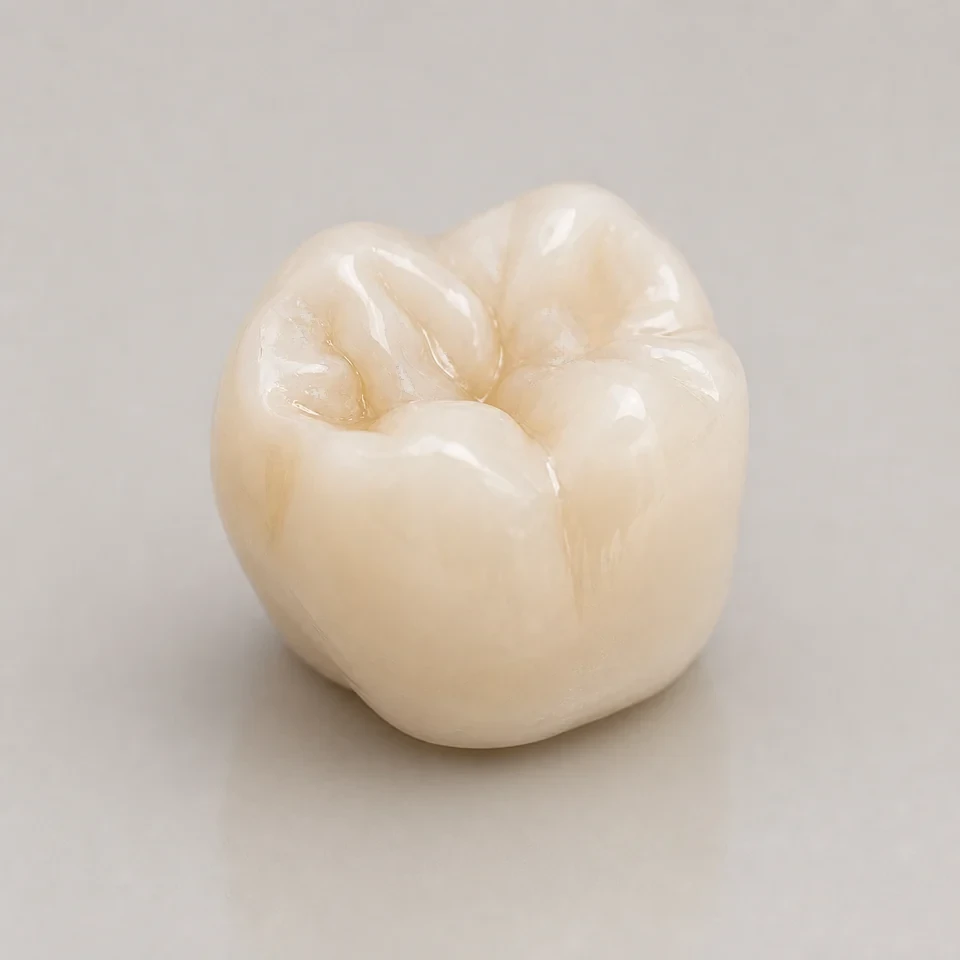
Zirconia Crowns
Full-contour and layered zirconia crowns and bridges milled from approved digital designs, with case-by-case review of margins, contacts, occlusion and material requirements.
View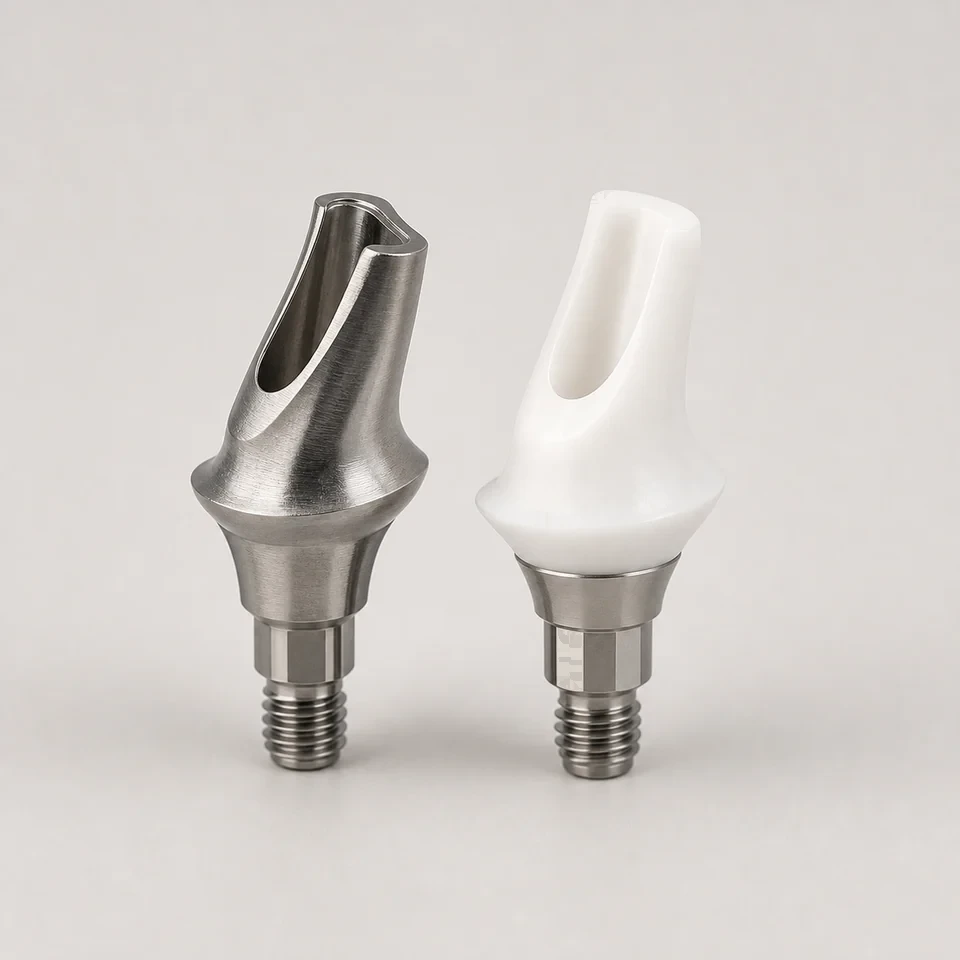
Custom Abutments
Custom abutments designed from scan body data for the confirmed implant system, with emergence profile shaping and retention review.
View