
Implant workflow
Screw-Retained vs Cement-Retained Implant Crown
Retention is a clinical decision with laboratory consequences. This guide lists what the lab needs to produce either option, and what is reviewed before production starts.
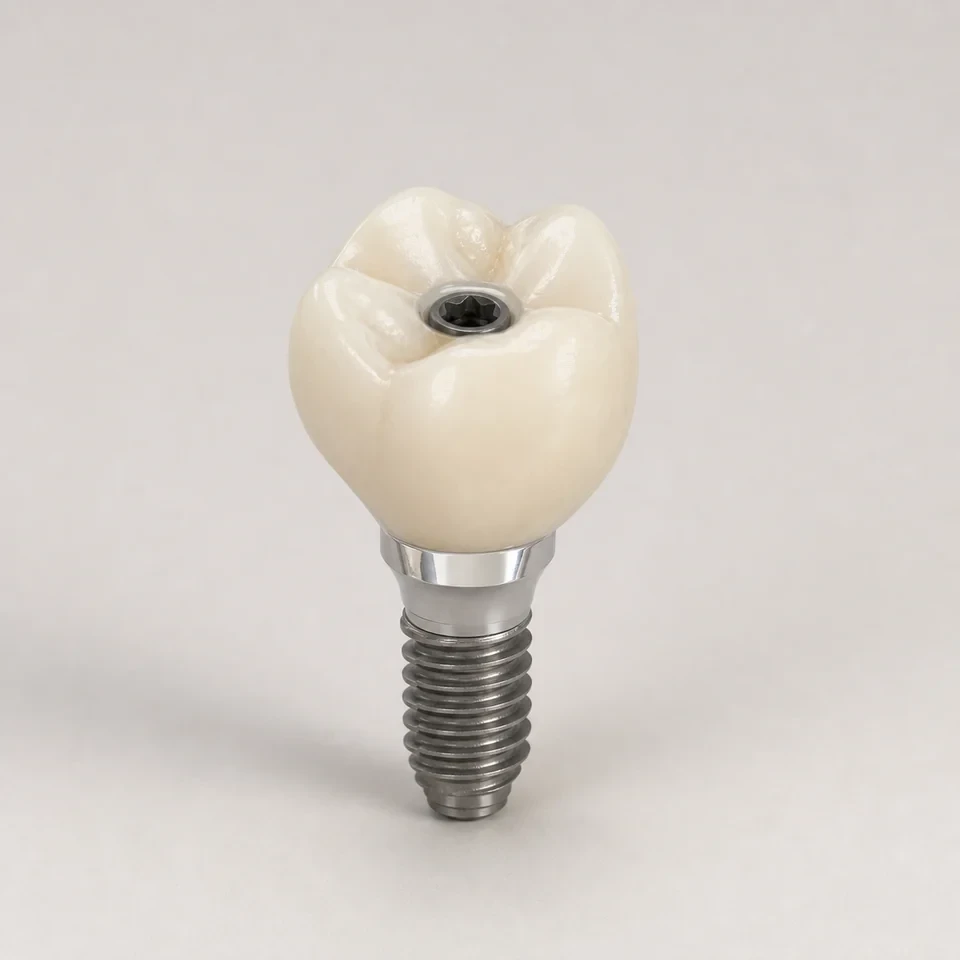
Both retention options are routine in a digital laboratory. The right choice depends on screw access position, retrievability needs and cement management — decided clinically, then produced to match.
What the laboratory reviews either way
- Implant system and connection verified against the scan body library
- Screw access channel position for screw-retained designs
- Emergence profile and margin location for cement-retained designs
- Occlusal material over the titanium base (zirconia or composite)
Screw-retained: what changes in production
- The design reserves the channel and checks its position against the prescription
- Torque specification is confirmed and stated on the delivery note
- Occlusal access is sealed per the clinician’s preference
Cement-retained: what changes in production
- The abutment margin is positioned to allow excess cement removal
- Cement selection guidance is documented but decided clinically
- Seating and contacts are verified on the abutment, not the scan body
Confirm before the first case
Implant system compatibility must be confirmed before production. If you are unsure which retention suits the case, send the scan and prescription for review — see Implant Crowns or send a case.