
Clinical preparation
Dental Crown Cementation: Choosing a Cement for Zirconia and E.max
Cement choice depends on material, retention form and preparation geometry. This guide walks through the decision for zirconia, E.max and PFM crowns.
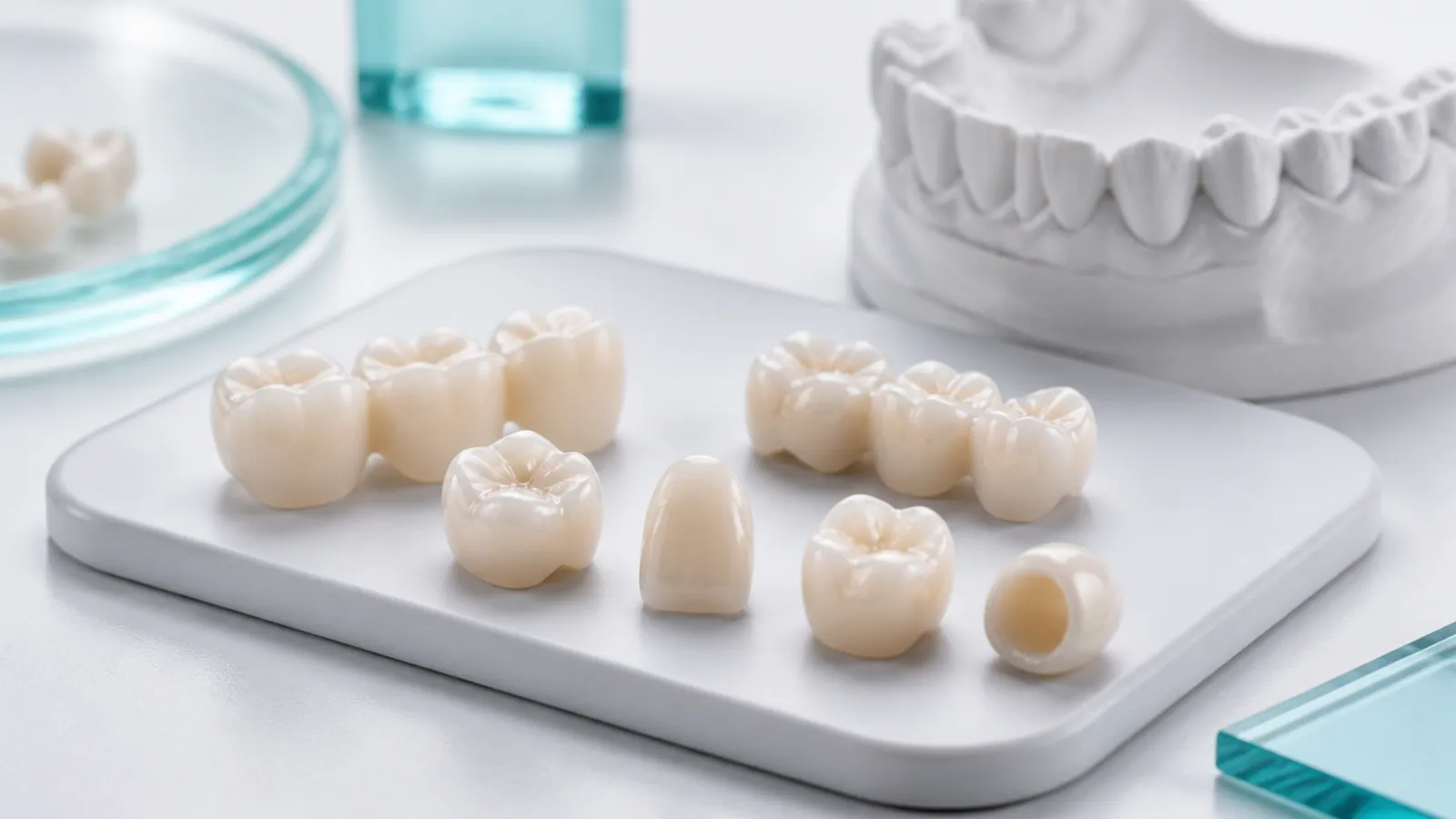
Dental crown cementation is the step that turns a finished restoration into a fixed part of the mouth, and the cement you choose depends on the crown material, how much retention the preparation provides, and how the margins were designed. A zirconia, lithium disilicate or PFM crown each behaves differently under cement, and the wrong choice can mean a crown that debonds or one that is needlessly hard to retrieve later. This guide walks through the decision for each material and the records that help a lab supply the right components with the case. For the materials themselves, see zirconia crowns and E.max crowns.
What drives the choice
The main variables are the material’s surface chemistry, the retention form of the preparation, and whether the margin is adhesive-friendly. A crown with strong mechanical retention can be luted with a conventional cement, while a minimal-preparation or low-retention crown needs the bond strength of an adhesive system. The substrate also matters: a sandblasted zirconia intaglio bonds differently from a glazed one, and a metal margin behaves differently from a ceramic one. The clinician’s control of isolation and the availability of a clean try-in sequence round out the decision. None of these factors acts alone, so the cement plan should be written against the actual preparation, not against the material name in isolation.
Zirconia
Zirconia is chemically inert, which means it does not form a reliable bond with every cement. For well-retained preparations a resin-modified glass ionomer or a conventional luting cement is often sufficient, while a low-retention zirconia crown usually benefits from a resin cement paired with treatment of the intaglio, such as silica coating or a primer designed for zirconia. The key is surface preparation: a clean, appropriately treated fitting surface bonds far better than a glazed or contaminated one. Clinicians should confirm the cement system is compatible with the treatment they plan to use, because a mismatch at this stage is hard to recover once the crown is seated.
Lithium disilicate (E.max)
Lithium disilicate is more adhesive-friendly than zirconia and routinely achieves a durable bond with resin cement after etching and silanization. For a crown with reasonable retention this adhesive route supports a conservative preparation and a good margin seal. The trade-off is that a strongly bonded crown is harder to retrieve if endodontic access is later needed, so the retention form and the long-term plan should be weighed together. As with any ceramic, isolation during placement is what protects the bond, and a contaminated field undermines even the most capable cement. The material rewards careful technique more than it punishes a particular product choice.
PFM
A porcelain-fused-to-metal crown carries a metal substructure that bonds well to many cements and needs less surface treatment than all-ceramic options. Conventional luting or resin-modified glass ionomer is common, and adhesive cement is optional rather than required. The metal margin also tolerates a less ideal bond better than a brittle ceramic edge, though the esthetic margin still depends on the preparation and the lab’s finish. For PFM crowns, the cement decision is usually driven by retention form rather than by the material itself, which makes the preparation geometry the part worth getting right.
Adhesive versus conventional luting
Adhesive luting gives higher bond strength and better sealing but demands isolation, a treated surface and a careful try-in. Conventional luting is simpler and more forgiving but relies on mechanical retention, so it suits crowns with clear taper control and adequate height. The choice is not about which is newer; it is about matching the cement to the preparation you actually cut. A crown with poor retention will fail with conventional cement no matter how well it was made, while a well-retained crown rarely needs the complexity of a full adhesive protocol.
Retention form and preparation geometry
Taper, height and surface area decide how much mechanical retention exists before cement is involved. A preparation with low taper and adequate axial wall height gives conventional cement a fair chance, while a short or over-tapered preparation pushes the decision toward adhesion. This is where crown margin design and reduction matter: a margin the lab can follow and enough wall height are what make any cement work. Recording the preparation geometry in the prescription helps the lab anticipate retention and advise on components before the crown is fabricated, rather than after a debond reaches the chair.
Cleaning and try-in sequence
Before cementation, the intaglio should be cleaned of any try-in paste residue, and the fitting surface should be free of contaminant. A try-in with a temporary try-in gel lets you check shade, fit and occlusion before committing, and it should be fully removed before the final cement goes on. Isolation and a dry field are especially important for adhesive systems, because moisture at the bond line is the most common cause of a weak seat. A short, repeatable sequence at the chair reduces the chance of a cementation-related remake and makes the result easier to defend if a contact later needs adjustment.
Records and instructions to request from the lab
Ask the lab to supply the cement recommendations, any intaglio treatment already applied, and the try-in components needed for the material. For adhesive cases, confirm whether a primer or bonding agent is expected on your side of the procedure. Note the margin type and the retention you built so the lab can flag a low-retention situation early, while there is still time to change the design. These records turn cementation from a guess into a planned step, and they are easy to include with the prescription when the case is submitted rather than reconstructed after a problem appears.
Next step
When the restoration returns, request a price list if you are scoping a batch of cases, or submit the preparation notes and the cement preference with the case up front. Clear instructions at submission let the lab return a crown with the right intaglio treatment and the right try-in parts, which keeps dental crown cementation predictable from design to seat. If a preparation looks low on retention, flag it so the cement plan can match the geometry instead of fighting it.