
Outsourcing decisions
Local vs Overseas Dental Lab: Cost, Control and Communication
Choosing between a local and an overseas laboratory is a trade-off across communication, logistics and revision handling. This guide sets out the decision factors.
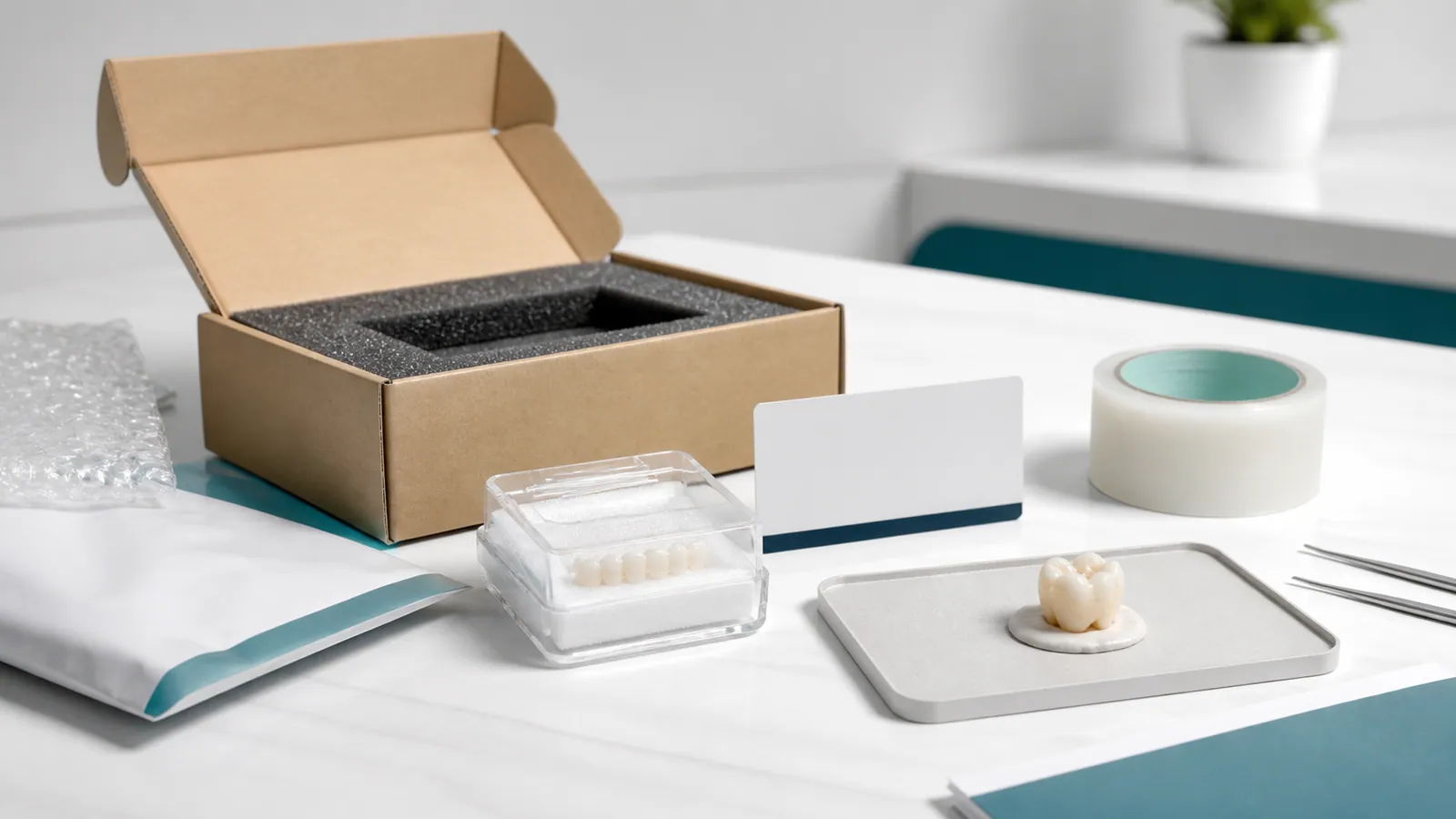
The decision between a local vs overseas dental lab comes down to a series of trade-offs rather than a single factor. Clinics weighing where to send restorations are really comparing communication speed, shipping logistics, revision handling and how case data is exchanged. An overseas dental lab can work well for the right case types, but the choice should follow the case, not a fixed preference.
This guide compares the two models on the axes that actually affect fit, esthetics and delivery, and points to practical references such as outsourcing dental cases to China and how to choose a dental lab in China.
The real comparison axes
The difference between the two models is often described in a single word, but the variables that determine whether a case succeeds are communication latency, the clarity of the case records, how revisions are handled, and the predictability of shipping. A local lab shortens the distance between a question and an answer; an overseas dental lab lengthens it, but can offset the gap with structured digital workflows and documented review steps. The useful frame is not “local is good and overseas is bad” but “which model fits this specific case.”
Several factors interact here: case complexity, how complete your records are, how often you expect adjustments, and whether the restoration is time-critical. A single well-documented crown with a clear prescription travels across the world far more reliably than a complex full-arch case sent with incomplete bite records. The model matters less than the discipline behind the case.
Communication and time zones
The main advantage of a local lab is immediacy. A phone call, a quick pickup, or a chairside question carries real weight when a case is time-sensitive. With an overseas dental lab, the exchange shifts to written records: scanned files, written prescriptions, photographs and asynchronous messages. That shift is not inherently worse, but it demands that the case be documented well enough to stand on its own.
Written communication also reduces ambiguity when the lab keeps a structured record of every instruction. The trade is speed of reply, which matters most in emergencies and least for routine, well-understood cases. Planning the conversation around the case — sending complete data up front rather than negotiating details mid-production — narrows the time-zone gap considerably.
Shipping and customs
Physical cases cross borders, and that introduces variables a local arrangement avoids: courier transit, customs clearance, declaration accuracy and the risk of loss or damage in transit. None of these are reasons to avoid overseas work, but they are reasons to build buffer into scheduling and to use a lab that documents its shipping and turnaround process clearly.
For time-critical cases, the shipping leg can dominate the calendar. For non-urgent, batchable work, it matters far less. A practical approach is to route urgent adjustments locally and send stable, scheduled production overseas, which keeps the border-crossing risk on the cases that can absorb it.
Revision and remake handling
Revisions are where the two models feel noticeably different. A local lab can often complete a minor adjustment quickly; an overseas lab needs the case shipped back and forth, which multiplies the time per cycle. The mitigation is to reduce the number of cycles rather than the speed of any single one.
That means investing in the records before production: accurate impressions or scans, a confirmed bite, clear shade references, and explicit design preferences. A lab with documented quality control and a written remake policy protects both sides when something does go wrong. The fewer surprises in the first delivery, the less the distance penalty matters.
Case data and records
Both models live or die on the same thing: the quality of the records you send. Digital workflows make cross-border work viable because a scan file and a written prescription carry the same information whether the lab is across town or across an ocean. For overseas work specifically, over-document rather than under-document.
Include margin photographs, stump shade, opposing arch contacts, and a clear statement of what an acceptable result looks like. When the case cannot be discussed live, the record becomes the conversation. A local lab can recover from a vague instruction with a phone call; an overseas dental lab cannot, so the written standard has to be higher.
Where each option suits
Local labs suit time-critical single units, adjustments and try-ins, and cases where you expect to iterate with the technician face to face. Overseas labs suit batchable production, well-understood routine cases, and cases where the prescription is stable and the records are complete.
Neither is correct for everything. A clinic that routes every case overseas will feel the distance on the urgent ones; a clinic that keeps everything local may route routine work through a model better reserved for urgent cases. Matching the model to the case is the point.
Running both in parallel
A common and practical setup is to run both: a local lab for urgent and complex adjustments, and an overseas dental lab for steady scheduled production. This keeps emergency capacity close while capturing the efficiency of overseas work on the cases that tolerate it.
The key is governance — the same prescription standards apply regardless of destination. A case that would fail locally will fail overseas too, so the records discipline has to be consistent. Treat the two as one workflow with two endpoints rather than two separate processes.
Evaluating a first case
Before committing volume, run a single trial case end to end. Send complete records, specify exactly what you want, and evaluate fit, contacts and shade against your own standard. The guide to choosing a dental lab in China lists the factors to score, and outsourcing dental cases to China explains the operational steps.
A first case is also the moment to confirm communication style: how questions are asked, how revisions are logged, and how the lab handles a mismatch. Those working habits predict the long-run relationship more than the first impression formed from a single comparison.
Next step
If you want to test the overseas model without disrupting your local setup, send a case with a complete prescription and a shade reference, or request a quote to compare scope before committing volume. Start with one well-documented unit and evaluate it by your own fit and esthetics standard.