
Digital workflow
CAD/CAM vs Traditional Dental Lab: What Changes for Your Cases
CAD/CAM and conventional production differ in more than equipment. This guide compares design control, revisions, materials and the records each route needs.
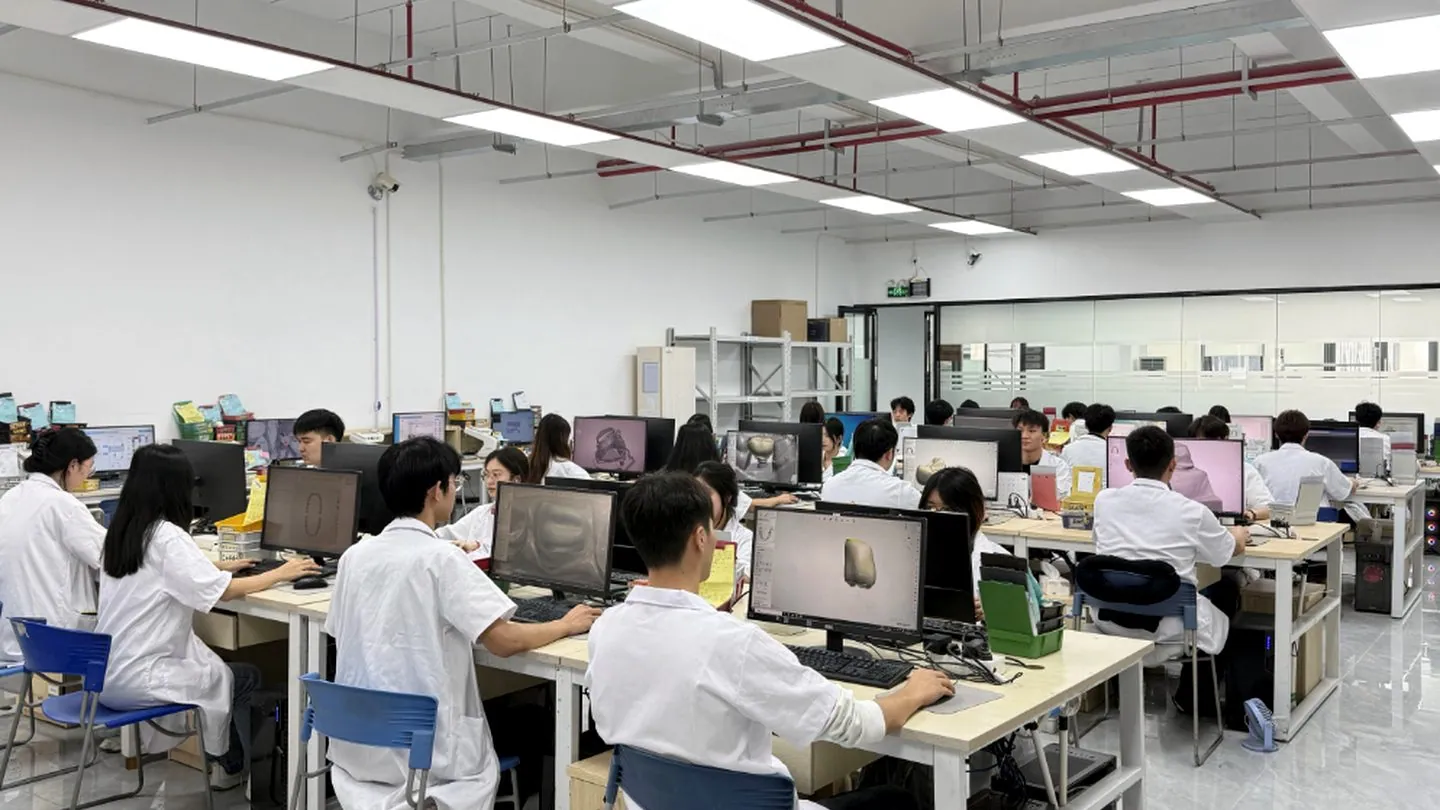
When a practice chooses how a restoration is made, the real question is what a CAD/CAM dental lab changes for the case in front of the dentist, not which machines sit on the bench. Digital and conventional production differ in design control, revision speed, material options and the records each route demands. Both reach a seated restoration, but they behave differently when something needs adjusting or when the case is complex. This guide compares the two routes on the points that affect your daily work, with reference to the lab’s digital workflow and its fixed restoration scope.
What actually differs
The headline difference is that one route keeps the case in software and the other keeps it in physical models and hand work. That single difference cascades into everything else. A digital case can be reopened and edited; a conventional case is usually re-layered or re-waxed. Design choices are visible and reversible earlier in CAD/CAM, while conventional work leans on the technician’s eye and the stone model. Neither is simply “better” — the fit depends on the scan and the prescription either way. What changes is how fast you can correct a contour and how much the correction costs in material and time.
Design and revision rounds
Revisions are where digital work shows its strength. A crown designed in software can be reshaped, re-contoured or re-spaced and re-milled without rebuilding from scratch. A conventional crown that needs a contour change goes back to the wax or the layering stage. For a case with several adjustment rounds, CAD/CAM keeps each round cheap and fast. For a case that is right the first time, the difference is small. The practical advice is to use the digital route when you expect iteration, and not to assume the route alone removes the need for a clear prescription.
Material options and constraints
Material choice overlaps both routes but is not identical. Zirconia and many polymers are milled or printed, which suits digital production, while pressed lithium disilicate and hand-layered porcelain remain strong in conventional and hybrid workflows. A zirconia crown can be designed and milled in one digital chain; a layered anterior unit may still benefit from hand characterization. The constraint is not availability but fit: some materials need specific sintering or pressing steps that the lab schedules regardless of the capture route. Ask which materials the lab runs digitally and which it finishes by hand.
Case data requirements
Digital cases demand better source data. An intraoral scan has to capture the margin cleanly, or the design inherits the gap; a conventional impression can sometimes be read where a scan failed. In return, the digital file stores easily and travels without physical shipping. Hybrid cases may send a scan for design and a printed model for finishing. The record the lab needs — prescription, shade, bite, implant data — is the same in both, but the digital route is less forgiving of a poor capture because there is no stone model to recover detail from. Good data matters more in CAD/CAM, not less.
Fit and repeatability
Repeatability is a genuine digital advantage. Once a design parameter is set, the next unit of the same type comes out the same, which helps with matching contralateral teeth or repeating a known-good anatomy. Conventional work can match this when the same technician builds both, but it varies more with who is at the bench. For a crown and bridge case where several units must agree, the consistency of a digital design helps. Fit at the margin still depends on the scan or impression, so the route changes consistency, not the foundation of accuracy.
Where conventional work still fits
Conventional production is not obsolete. Full-mouth esthetic cases, complex characterization, and situations where soft tissue or a deep margin scans poorly may still be better served by hand work and a physical try-in. Some clinicians trust a wax-up they can hold more than a screen they cannot. A lab that runs both routes can choose by case rather than by dogma. The correct comparison is not machine versus hand, but which route serves this specific tooth, arch and patient given the records available.
Hybrid workflows
Most modern labs are hybrid rather than purely one or the other. A case may be scanned, designed digitally, milled as a framework, then characterized and glazed by hand. Digital denture support often follows this pattern: a digital setup reviewed on screen, then finished and polished conventionally. Hybrid work takes the repeatability of software and the esthetics of hand finishing. When evaluating a lab, ask how it blends the two, because the answer tells you where your case will be controlled and where it will be finished by judgment.
Questions to ask a laboratory
To decide between routes for your cases, ask the lab direct questions. Which materials do you mill versus layer by hand? How do you handle a revision on each route? What scan quality do you need from me? How do you verify fit before dispatch? A lab that answers in process terms, not slogans, gives you something to plan around. The choice of a CAD/CAM dental lab versus a conventional one is really a choice about which steps the lab controls in software and which it controls at the bench, and how that split serves the cases you send most often.
Next step
Try one case on each route and compare the revision speed and the fit at the chair before committing a case mix. To begin, send a case to the lab to review which services run digitally and which are finished conventionally.